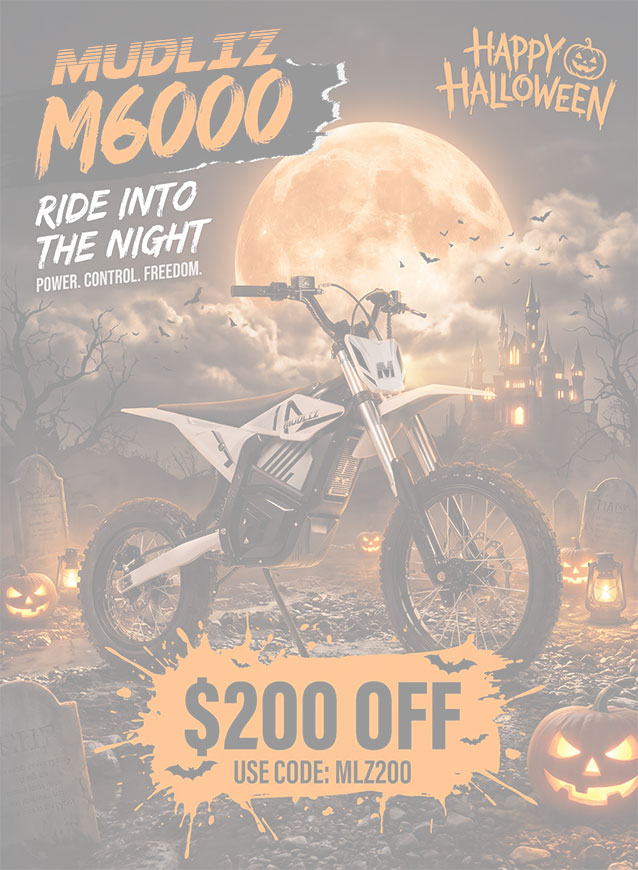
How Fast Does a 6000W Electric Dirt Bike Go? Speed Factors and Real-World Expectations
Many current 6000W electric dirt bikes are advertised with top speeds around 45 to 55 mph. That is a useful shopping range, not a promise that every 6000W bike will reach the same number. The MUDLIZ M6000, for example, is listed at up to 45 mph.
The result changes because 6000W describes electrical power, not one fixed road speed. For a bike listed at 45 mph, a practical planning estimate is about 35 to 45 mph on firm, open ground, about 20 to 35 mph on ordinary loose or rolling trails, and about 10 to 25 mph on steep or technical sections. These are operating estimates, not guaranteed test results. Rider skill and safe stopping distance may set a lower limit.
The practical goal is to check how the full system creates speed and whether the bike remains useful on your terrain. This guide separates the advertised maximum from realistic riding speeds and shows how to judge a claim.
A 6000W Electric Dirt Bike Is Often Listed Around 45 to 55 MPH
Peak Power Does Not Set One Fixed Top Speed
Two bikes can both display 6000W on the product page and still have different top speeds. One brand may mean 6000W peak output available for a short burst. Another may mean 6000W rated output that the system can hold for longer. The second bike may use a higher peak figure that appears elsewhere in the specifications.
Power must overcome air resistance, tire drag, drivetrain loss, and weight. More watts can support acceleration and climbing, but motor speed and gearing still create the final ceiling. Never judge a 6000W bike by wattage alone.
The MUDLIZ M6000 Is Listed at Up to 45 MPH
The MUDLIZ M6000 pairs 6000W peak power with a 60V 25Ah battery and a 60V 80A controller. Its listed top speed is 45 mph, and its selectable speed modes are 15, 30, and 45 mph. Those modes give a rider a more manageable way to match output to practice, tighter trails, or open off-road sections.
Other 6000W electric dirt bikes may list different top speeds because voltage, controller limits, motor setup, wheel size, and test conditions vary. This is why wattage alone cannot predict how fast a bike will go.
Battery, Controller, and Gearing Set the Speed Ceiling
Higher Voltage Supports More Motor Speed
Voltage helps determine how fast a motor can turn. A 72V system may have more speed potential than a 60V system when the motor, controller, and gearing are designed for it. That does not mean a higher-voltage label automatically makes a better bike. The battery must deliver the needed current, and every part of the system must be matched safely.
Battery capacity is different. Amp-hours and watt-hours mainly describe stored energy and possible ride time. A larger-capacity pack may hold voltage better under load, but adding amp-hours alone does not automatically raise top speed. When comparing batteries, separate voltage from capacity instead of treating the pack as one number.
Controller Limits Can Hold Back Peak Output
The controller decides how much current reaches the motor and may also set a speed limit. A 6000W-capable motor cannot deliver its full potential if the controller or battery management system allows less power. Riding modes can apply lower limits on purpose, giving smoother throttle response, better control, and lower energy use.
Motor heat, controller heat, and battery temperature can trigger protection as well. When the system reduces power to protect its parts, acceleration and hill speed may drop. This is normal protection behavior, not always a sign that the motor has failed.
Gearing and Wheel Size Trade Acceleration for Speed
A smaller rear sprocket can raise theoretical top speed, while a larger rear sprocket usually improves low-speed pull and climbing. Changing gearing also changes chain load, heat, control, and the motor's operating range. A setup that looks faster on paper may perform worse if the motor struggles to reach that speed.
Wheel diameter matters because one motor revolution moves the bike a different distance with a different tire size. A Grin Technologies motor guide also notes that actual loaded speed is lower than no-load speed and ties motor speed to battery voltage and wheel diameter. In plain terms, the whole drive setup matters more than the watt label.

Expect 35 to 45 MPH on Firm Ground and Less on Trails
These ranges turn a 45 mph claim into useful riding expectations. They are planning estimates for a healthy 6000W-class bike, not laboratory results or guarantees. Different hardware, riders, and surfaces can produce results outside them.
Firm Open Ground Can Allow About 35 to 45 MPH
A fully charged bike has the best chance of approaching its listed maximum on a long, level, firm surface with room to accelerate and stop. A lighter load, correct tire pressure, little wind, and a well-adjusted chain also help. For a model listed at 45 mph, expect roughly 40 to 45 mph in favorable conditions and closer to 35 to 40 mph when headwind, added weight, minor surface drag, or a lower charge works against it.
Loose or Rolling Trails Often Keep Speed Near 20 to 35 MPH
Ordinary dirt trails rarely provide enough straight, smooth ground for a top-speed run. Small climbs, gravel, shallow sand, turns, bumps, and limited visibility keep a sensible pace lower. About 20 to 35 mph is a more useful expectation on open, flowing off-road trails, although a rider should slow further whenever sight distance, trail traffic, grip, or braking room becomes limited.
Steep or Technical Sections Often Fall Near 10 to 25 MPH
Rock gardens, deep ruts, mud, soft sand, tight turns, and long climbs demand torque and control rather than maximum speed. About 10 to 25 mph is a practical expectation through many technical sections, and walking pace may be appropriate around difficult obstacles. A spinning rear tire can consume substantial power without creating equal forward speed, so the speedometer may never approach the flat-ground claim.
Added load mainly slows acceleration and climbing. Low charge, temperature, tire pressure, chain adjustment, brake drag, and bearing condition can reduce performance further. Use the ranges for planning, then adjust for safe control.
To check your bike's actual speed, use a long, level course on private land and compare the display with a GPS reading. Test in both directions to reduce the effects of wind and slope. GPS may lag during short runs, so treat the result as an estimate. Wear full protective gear, check the brakes and tires, and increase speed gradually.

Check These Details Before Buying a 6000W Electric Dirt Bike
Peak and Rated Power Show Different Performance Limits
Read the full specification sheet and look for both rated and peak output. Peak power may be available only during acceleration or another short high-load period, while rated power is intended to describe longer operation. If a seller gives only 6000W and a dramatic speed number, ask which type of output the figure represents.
Battery Voltage and Controller Current Reveal the Full Setup
Check battery voltage, capacity, controller current, motor type, gearing, wheel size, and listed speed modes. These details show whether the system is designed for strong low-speed torque, a higher speed ceiling, or a balance of both. They also make it easier to compare two bikes that use the same 6000W headline.
Test Conditions Make Top Speed Claims More Meaningful
Look for the rider weight, charge level, surface, slope, temperature, wind, tire setup, and test distance behind a speed claim. A result recorded on firm, level ground cannot predict the same number on a soft climb. If the conditions are missing, treat the advertised speed as a best-case figure and leave room for a lower real-world result.
A useful 6000W bike should provide more than a high top-speed claim. Consider the MUDLIZ M6000 off-road electric dirt bike. It combines 6000W peak power with a 60V 25Ah battery, a 60V 80A controller, and selectable 15, 30, and 45 mph modes. These settings let riders match the response to their experience and terrain. Before choosing it, confirm rider fit, payload, available riding areas, and the performance you actually need.
If public-road access matters, first check whether an electric dirt bike is street legal in your state.
Final Thoughts
A realistic starting answer for a 6000W electric dirt bike is about 45 to 55 mph in current manufacturer listings, but the watt figure does not guarantee that range. For a bike listed at 45 mph, plan on roughly 35 to 45 mph on firm open ground, 20 to 35 mph on loose or rolling trails, and 10 to 25 mph on steep or technical sections. The actual result can sit outside those estimates.
For a useful buying decision, check peak versus rated power, battery voltage, controller output, gearing, wheel size, payload, and test conditions. Expect hills, loose ground, low charge, temperature, and added weight to reduce real-world performance. Most of all, choose a bike that gives you predictable control on legal terrain, not simply the biggest number on the page.
6000W Electric Dirt Bike FAQs
Can a 6000W Electric Dirt Bike Go 60 MPH?
Some heavily optimized or higher-voltage models may claim speeds near 60 mph, but 6000W alone does not guarantee it. Reaching that speed depends on motor speed, voltage, controller limits, gearing, wheel size, aerodynamics, rider weight, and test conditions. Do not modify safety limits simply to reach a target number.
Is a 6000W Electric Dirt Bike Too Fast for a Beginner?
Full-power operation can be too demanding for a new rider. A beginner should use the lowest speed or power mode, practice throttle and braking on a controlled surface, wear full protective gear, and get qualified instruction when available. Bike fit and smooth controls matter as much as the motor rating.
How Accurate Is an Electric Dirt Bike Speedometer?
It can be accurate when the wheel size, sensor, and display settings are correct. A wrong tire circumference can create a consistent error. Compare the display with GPS over a steady, level section, but allow for GPS lag and signal quality. Service the sensor if readings jump or disappear.
Does a Bigger Battery Make a 6000W Bike Faster?
More battery capacity usually means more stored energy, not automatically more speed. Higher voltage can support a higher motor speed when every component is designed for it. Installing a battery with unapproved voltage can damage the controller or motor and create a serious fire or handling risk.