What Is an E-Moto? Electric Dirt Bikes vs. E-Bikes Explained
An e-moto is an electric motorcycle-style machine, while an e-bike is a bicycle with electric assistance. An e-moto normally uses a throttle and foot pegs, so the motor does the work. An e-bike keeps working pedals and a bicycle drivetrain, so pedaling remains part of the ride.
The fastest way to tell them apart is to look at how the rider moves the vehicle. A throttle-first machine with motorcycle-style parts is closer to an e-moto. A pedal-based machine that adds electric help is closer to an e-bike. The name on the product page is less useful than the controls and construction in front of you.
These differences change the weight, acceleration, terrain, transport needs, and legal classification. Use the comparison below as a quick check, then review the detailed sections before choosing a bike.
The Main Differences Between an E-Moto and an E-Bike
|
Comparison |
E-Bike |
|
|---|---|---|
|
Main power |
Motor drives the bike |
Rider pedals with motor assistance |
|
Rider controls |
Throttle and foot pegs |
Pedals and bicycle controls |
|
Frame and parts |
Motorcycle-style and built for larger impacts |
Bicycle-style and usually lighter |
|
Riding feel |
Stronger acceleration and more weight |
Smoother assistance and easier handling |
|
Typical terrain |
Motorized trails, tracks, and private land |
Roads, bike lanes, and permitted bike trails |
|
Legal category |
Often treated as an OHV or motorcycle |
May qualify for an e-bike class |
E-Motos Use Throttles and Foot Pegs Instead of Pedals
Most e-motos move when the rider twists or presses a throttle. The rider does not need to pedal to keep the motor working. Foot pegs provide a stable platform for standing over bumps, and the long seat lets the rider shift body position. This setup feels familiar to dirt bike and motorcycle riders.
A purpose-built off-road electric dirt bike also tends to place a large battery and motor inside a reinforced central frame. The drive system is designed to deliver power directly rather than add assistance to human pedaling. Exact output varies widely, so compare the manufacturer's rated and peak figures instead of judging by body size.

E-Bikes Keep Working Pedals and Bicycle Controls
An e-bike keeps fully operable pedals and a bicycle drivetrain. Under the CPSC federal product definition, a low-speed electric bicycle has two or three wheels, working pedals, a motor under 750 watts, and a motor-only speed below 20 mph under the stated test. State road rules and class systems can add other limits.
Pedal-assist e-bikes add motor help while the rider pedals. Some legal Class 2 designs also have a throttle, but they still retain working pedals and must stay within applicable limits. That is why throttle alone is not a complete test. Look at pedals, power, speed, labeling, and local law together.
E-Motos Use Heavier Parts for Off-Road Riding
Compared with a typical e-bike, an e-moto often has a stronger frame, longer suspension travel, larger brake rotors, wider tires, and more motorcycle-like controls. These parts help manage jumps, ruts, repeated hard braking, and motor torque. They also add weight and make the machine harder to carry or store.
The larger battery, frame, wheels, and suspension can make an e-moto feel planted over rough ground. The same mass becomes noticeable when the bike tips, gets stuck, or must be loaded into a truck.
E-Motos Deliver Stronger Power While E-Bikes Add Pedal Assistance
An e-moto can deliver torque as soon as the rider opens the throttle, while an e-bike usually adds power more gradually as the rider pedals. The faster response helps an e-moto climb loose terrain, but it can surprise a beginner. Smooth wrist movement, a balanced stance, and careful braking are essential. Start in the lowest power mode and practice away from traffic and other trail users.
E-Bikes Are Easier to Use on Streets and Smooth Trails
An e-bike is usually easier to walk, lift onto a rack, carry upstairs, or pedal after the battery is low. Commuter or light trail tires also roll more efficiently on streets, greenways, and smoother paths than e-moto knobby tires. An electric mountain bike sits between the two, but it still centers the ride around pedaling.
Where E-Motos and E-Bikes Can Be Ridden
Qualifying E-Bikes Can Often Use Roads and Bike Lanes
A qualifying e-bike may be allowed on roads, bike lanes, or certain paths where bicycles can travel. Access still depends on the state, e-bike class, rider age, and the agency that manages the path. Some trails allow only Class 1 pedal-assist bikes, while others close all electric bicycles.
Off-Road E-Motos Usually Need Motorized Riding Areas
A non-street-legal e-moto normally belongs on designated OHV areas, motorized trails, private riding parks, closed courses, or private land with permission. A quiet electric motor does not turn a motorized trail vehicle into a bicycle. Check registration stickers, permits, protective gear, age rules, and seasonal closures before riding.
For example, California DMV eMoto guidance treats qualifying no-pedal off-highway e-motos as OHVs that require off-highway identification. Other states may use different classifications.
Street-Legal E-Motos Must Meet Motorcycle Requirements
Before riding on public streets, check whether your electric dirt bike is street legal in your state. Registration may require a road-eligible VIN, manufacturer certification, title, insurance, a motorcycle license, and compliant equipment. Adding a headlight, mirror, or pedal kit does not guarantee that an off-road model can be registered.

How to Choose Between an E-Moto and an E-Bike
Step 1 Choose the Main Riding Location
Choose an e-bike when most trips use streets, bike lanes, greenways, or smoother bicycle trails. Consider an e-moto when the main goal is off-road recreation on legal motorized terrain. Confirm access before buying, because the nearest trail may not allow the vehicle you want.
Step 2 Compare Real Specifications
Check working pedals, rated power, top speed, throttle behavior, total weight, wheel size, suspension, brakes, range conditions, and charging time. Do not rely on a product category alone. Two machines called e-motos can have very different power and size.
Step 3 Check Fit and Skill Level
Make sure you can reach the controls, place a foot down, lift the bike after a fall, and manage its acceleration. New riders benefit from adjustable power modes and a calm practice area. Wear a motorcycle-rated helmet and suitable eye, hand, ankle, and body protection for e-moto riding.
Step 4 Plan Transport and Storage
A non-street-legal e-moto may need a truck, van, or trailer to reach the trail. Check payload, tie-down points, battery transport guidance, storage space, and charging access. An e-bike may fit a rated bicycle rack, but heavy models can exceed a standard rack's limit.
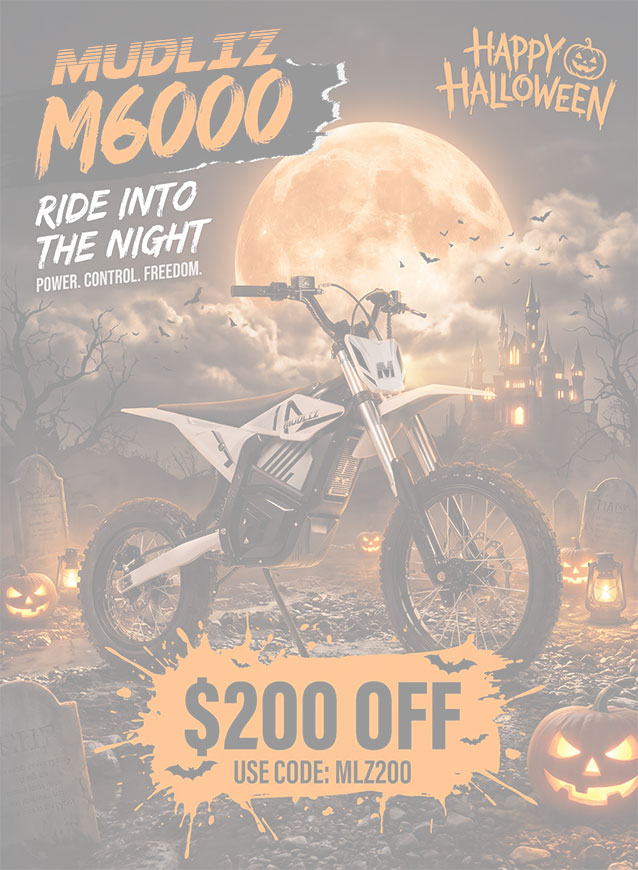
If you want the stronger acceleration, dirt bike controls, and off-road setup described above, consider the MUDLIZ M6000 off-road electric dirt bike. It offers 6000W peak power, a 60V 25Ah battery, and up to 56 miles of manufacturer-listed range. That combination suits riders looking for motor-first trail performance rather than bicycle-style pedal assistance. Actual range varies with speed, terrain, rider weight, and riding mode, so check the bike's size, weight, and local riding rules before buying.
Final Thoughts
An e-moto is best viewed as a motorcycle-style electric machine, often built as an electric dirt bike. An e-bike remains a bicycle with working pedals and electric assistance. The visible differences in controls and construction matter, but the legal decision depends on the complete specifications and local rules.
Choose an e-bike for bicycle-based transportation and pedal-focused riding. Choose an e-moto for motor-first off-road performance when you have legal terrain, protective gear, suitable skills, and a way to transport it. Always verify the exact model rather than trusting a broad product label.
E-Moto FAQs
Can an E-Moto Have Pedals?
Yes, some high-power machines have pedals, but pedals alone do not make them legal e-bikes. The pedals must work, and the complete vehicle must meet applicable power, speed, labeling, and state requirements.
Can You Charge an E-Moto From a Regular Outlet?
Many models use a charger that plugs into a standard household outlet, but voltage and charging requirements vary. Use only the approved charger, follow the manual, and avoid extension cords unless the manufacturer permits them.
How Long Does an E-Moto Battery Last on a Ride?
Range changes with battery capacity, rider weight, speed, hills, temperature, tire pressure, and riding mode. Compare range claims only when test conditions are stated, and keep a reserve for returning to the trailhead.
Is an E-Moto Good for a Beginner?
It can be when the bike fits the rider and offers manageable power. Beginners should start with low power, professional instruction where available, full protective gear, and a controlled area that allows motorized riding.